
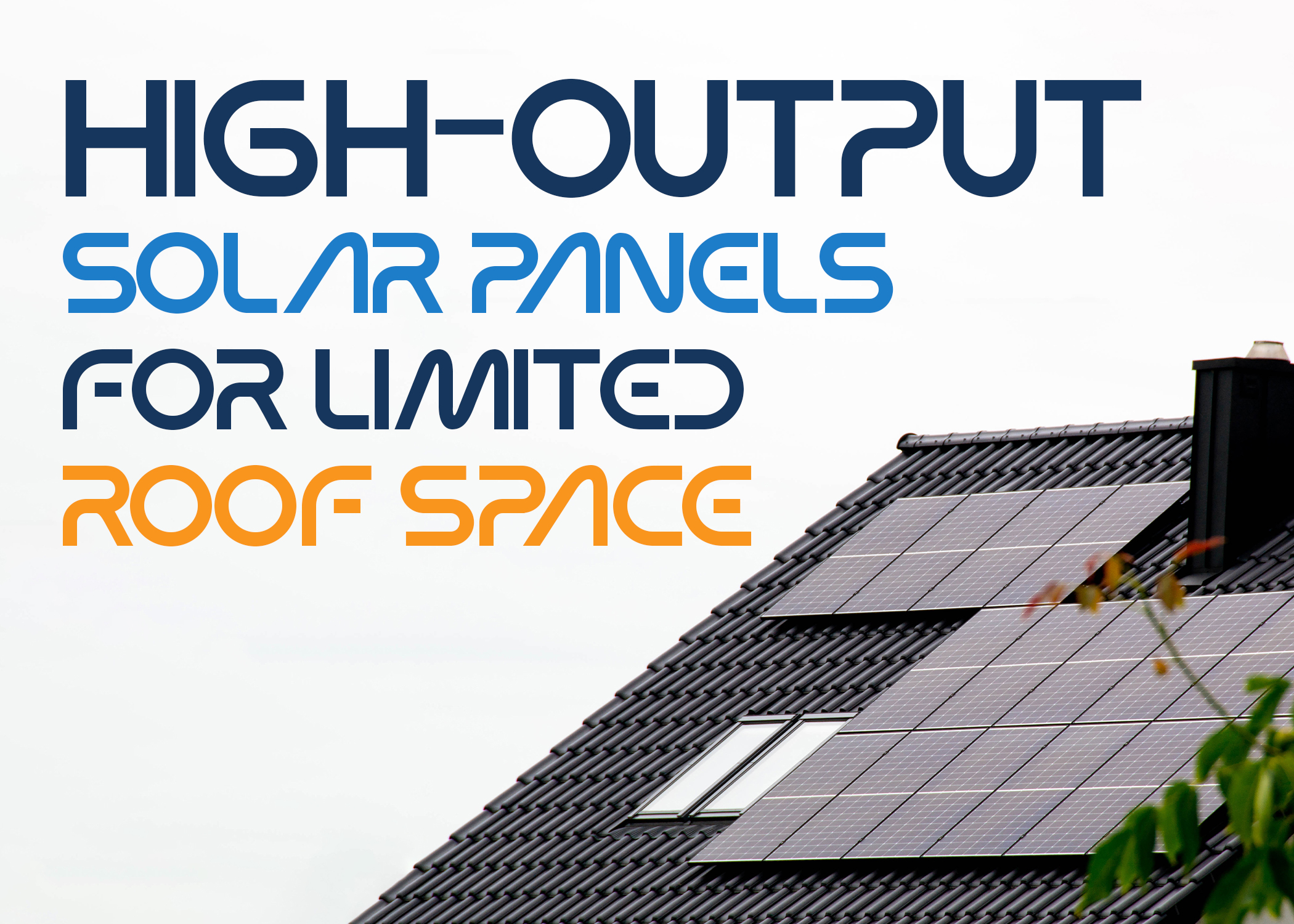
How efficient panels, module-level optimization, and a custom layout can improve solar production on a small or complex Saskatchewan roof.
Solar energy can be an excellent investment for Saskatchewan homeowners, but not every roof provides a large, simple surface for a conventional solar array. Many city homes have several roof levels, dormers, gables, vents, chimneys, and shaded areas. These features reduce the space available for solar modules. When electricity use is high and the roof is complicated, the solution is not always to install more panels. In many cases, the better approach is to use high-output solar panels and design the system around the strongest roof sections.
What Are High-Output Solar Panels?
High-output solar panels generate more electricity per panel than standard lower-wattage modules. They normally use efficient monocrystalline solar cells and improved module technology to produce greater power from a similar surface area. This makes them useful for homes with limited south-facing roof space or complex roof geometry.
Two panels may have almost the same dimensions, but one may produce significantly more rated power. When every square metre matters, selecting the higher-output option can increase total system capacity without expanding the array into unsuitable areas.
Why Roof Space Becomes a Challenge
A roof may look large from the ground, but only part of it may be appropriate for solar installation. Installers must consider orientation, pitch, shade, structural conditions, access, roof edges, fire clearances, plumbing vents, skylights, and other obstructions. North-facing sections may provide less value, while small roof faces can be difficult to use efficiently.
Homes with multiple levels create another challenge. Panels may need to be divided into groups installed at different heights, angles, or orientations. A layout using many lower-output modules may not fit. High-output solar panels allow the designer to concentrate more generating capacity on the best available surfaces.
More Energy from the Same Footprint
The main advantage of high-output panels is improved power density. A system can produce more electricity using fewer modules, which is valuable when roof area is restricted. Fewer panels may also reduce attachment points, wiring connections, and roof penetrations, although the final design depends on the racking system and installation requirements.
A well-planned array uses the most productive roof faces first. South-facing sections generally receive strong solar exposure, while east- and west-facing sections may help spread energy production across the day. By combining efficient modules with accurate layout planning, homeowners can achieve a stronger annual energy yield without covering every roof surface.
Power Optimizers for Complex Roofs
Complex roofs often experience uneven sunlight. One group of panels may receive full sun while another is temporarily shaded by a dormer, nearby tree, chimney, or upper roof level. Module-level power electronics, such as power optimizers or microinverters, can help each panel operate more independently.
In the Saskatoon project shown on the existing Suncatcher Solar page, panels were installed across several south-facing roof areas at different levels and with different shapes. The system used high-efficiency 400-watt monocrystalline modules with SolarEdge power optimizers. This arrangement helped make effective use of the available roof space and supported panel-level performance monitoring.
Panel-level monitoring gives homeowners better visibility into system operation. Instead of seeing only total production, the owner or installer can review how individual modules or groups are performing. This can support maintenance and troubleshooting throughout the system’s service life.
Design Matters as Much as Panel Wattage
A high wattage rating alone does not guarantee the best result. The quality of the solar design is equally important. The installer should review electricity consumption, roof measurements, orientation, shading, structural capacity, and electrical service before recommending a system.
The most effective layout may include panels on more than one roof face and different row lengths to fit around dormers or projections. Proper spacing is essential so panels remain accessible and do not conflict with drainage, snow movement, or required clearances.
Saskatchewan’s seasonal conditions should also be considered. Snow can temporarily reduce production, and roof shape affects how snow accumulates or slides. An experienced local contractor can evaluate panel placement, tilt, racking, and access so the array is practical for the building and climate.
Can High-Output Panels Reduce the Number Needed?
Yes. In many projects, high-output panels can reduce the number of modules required to reach a target system size. For example, a 6-kilowatt array would require 15 panels rated at 400 watts, compared with 20 panels rated at 300 watts. The actual system size, inverter selection, and expected production must be confirmed through detailed design, but the comparison shows why higher-output modules are attractive for limited roofs.
Using fewer panels can simplify the layout and leave more room around roof obstacles. However, homeowners should compare the complete installed system rather than focusing only on the number on the panel label. Module efficiency, warranty, temperature performance, inverter compatibility, racking, workmanship, and expected annual production all contribute to long-term value.
When Is Ground-Mounted Solar a Better Choice?
A ground-mounted array may be more suitable for farms, acreages, rural properties, or commercial sites with open land. Ground systems can often be oriented and tilted more freely and may be easier to access for inspection or snow clearing.
However, they require suitable land, foundations, trenching, and a clear route for electrical connections. For an urban home with limited yard space, optimizing the roof may remain the most practical choice. A professional assessment can compare roof-mounted and ground-mounted options based on cost, space, energy goals, and property conditions.
How Suncatcher Solar Approaches Limited Roof Space
A successful solar project begins with an accurate assessment rather than a one-size-fits-all panel count. Suncatcher Solar can review usable roof areas, identify the best panel locations, and design an array that matches the home’s electrical needs as closely as practical. Where roof space is restricted, high-output solar panels can improve system capacity while maintaining a clean, organized layout.
The goal is to balance production, safety, appearance, and long-term reliability. This includes selecting compatible equipment, planning electrical connections, considering shading, and providing monitoring so performance can be reviewed after installation.
Is Your Roof Suitable?
A small, multi-level, or irregular roof may still support a productive solar system. High-output modules, panel-level optimization, and thoughtful design can turn separated roof sections into an effective array.
The next step is a professional site and energy assessment. By reviewing electricity bills and property conditions, Suncatcher Solar can estimate the system size, panel layout, and expected production for your home. Contact Suncatcher Solar to explore a custom solar design that makes the best use of your available roof space.